Comparison
Royal Enfield vs. Triumph Bonneville
If you're comparing a Royal Enfield and a Triumph Bonneville, you're buying more than a motorcycle. You're buying a story you want to be part of.
Both trace their names to the same era, the same country, and broadly the same idea — a British parallel twin with classic proportions, built for riders who care more about how a bike feels and looks than what it can do at the top of the rev range. This comparison focuses on the T100 and T120 against Royal Enfield's Interceptor 650 and Classic 650, which are the closest equivalents in riding style and intent.
The history behind both names
The Triumph Bonneville and Royal Enfield are two of the oldest motorcycle names still in production, and they got there by very different paths.
The Bonneville name comes from the Bonneville Salt Flats in Utah, where Johnny Allen set a land-speed record of 193 mph in a Triumph-powered streamliner in 1956. The T120 Bonneville debuted at the Earls Court show in London and went on sale in 1959. It arrived at a moment when British bikes dominated the American market, and the Bonneville quickly became the most visible of them — fast, well-proportioned, and riding a wave of cultural momentum that would carry it through the next decade.
Royal Enfield's roots are older. The company began in Redditch, England in 1891, won a contract to supply parts to the Royal Small Arms Factory in Enfield, and adopted the “Made Like a Gun” slogan that still appears on the brand today. The first Royal Enfield motorcycle was built in 1901, and the Bullet name appeared in 1932, making it the longest-running motorcycle nameplate in continuous production anywhere in the world.
Both companies supplied motorcycles to the British military in both World Wars. During World War II, Royal Enfield built the WD/RE 125, nicknamed the Flying Flea — a lightweight two-stroke that could be dropped by parachute with airborne troops. Triumph supplied bikes to the Allied forces as well, though its Coventry factory was destroyed in the Blitz, forcing production to relocate.
Where the ownership stories diverge
Triumph's original company was the British Triumph Engineering Co. It ran through the 1970s before collapsing under pressure from Japanese manufacturers and internal labor disputes. The Meriden factory closed in 1983. The brand was purchased by property developer John Bloor, who spent years quietly engineering a new company from scratch. A reborn Triumph launched in the 1990s out of a new plant in Hinckley, England. The current Triumph is a British company making motorcycles in England and Thailand. It has no direct corporate lineage to the original Triumph Engineering.
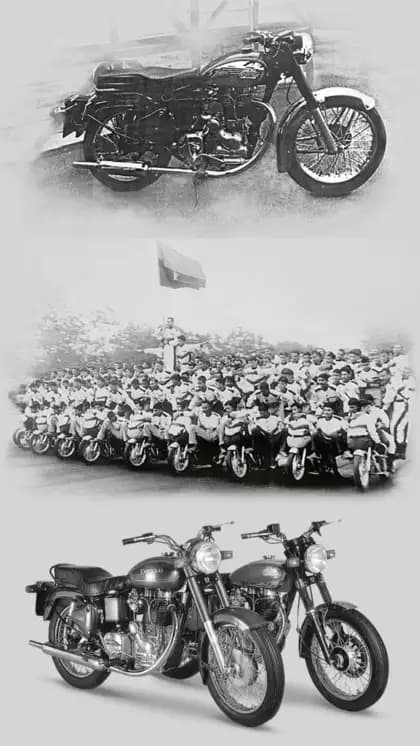
Royal Enfield's story ran the other direction. In 1955, the Indian government ordered 800 Bullet 350s for border patrol duty, and the Redditch company partnered with Madras Motors to assemble them in Chennai. The British operation wound down through the 1960s, but the Indian company kept building. In 1994, Eicher Motors acquired the company and began modernizing production. Under CEO Siddhartha Lal, Royal Enfield rebuilt its engineering capability, developed the current J-platform engines, opened a technology center in the UK, and grew into one of the world's largest motorcycle manufacturers by volume.
Royal Enfield is the only brand in this comparison that never actually stopped making motorcycles. The name, the Bullet, the design language — all of it traces a continuous line from Redditch to Chennai without a break. Triumph, for all its cultural weight, is a different company than the one that built the original Bonneville. Neither fact makes either bike better or worse to ride, but it's worth knowing before you decide which history you're buying into.
Cultural significance
Triumph Bonneville on screen
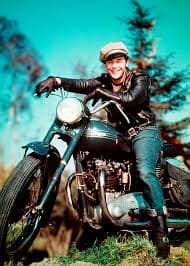
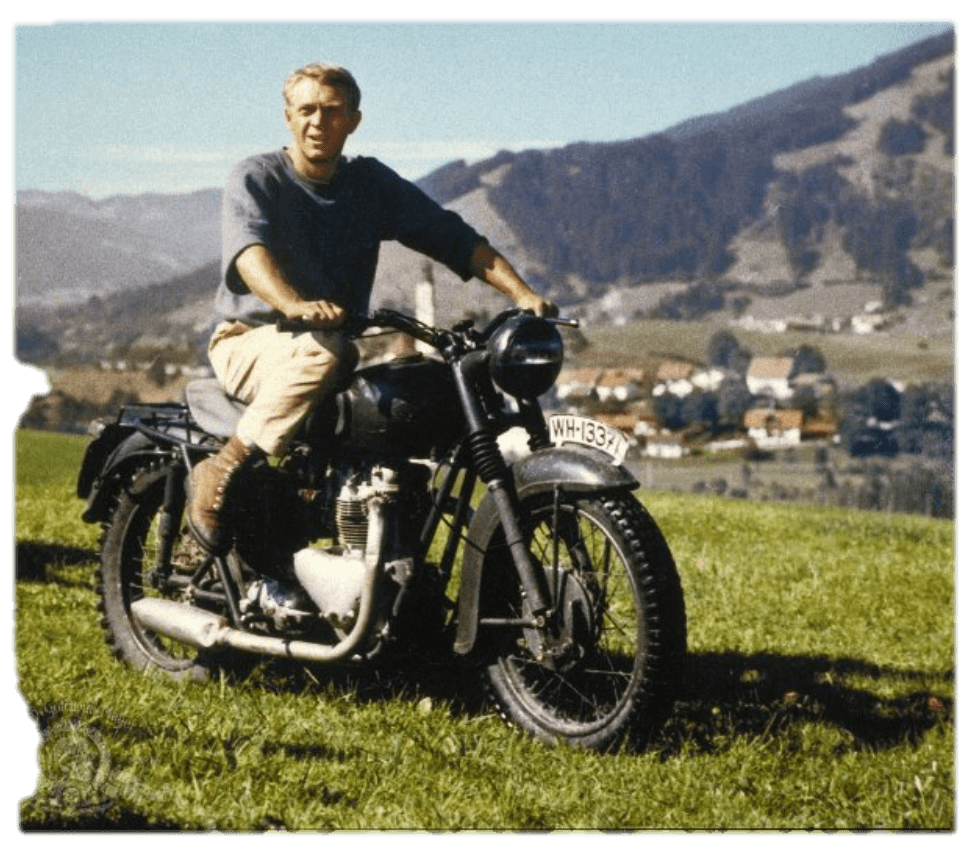
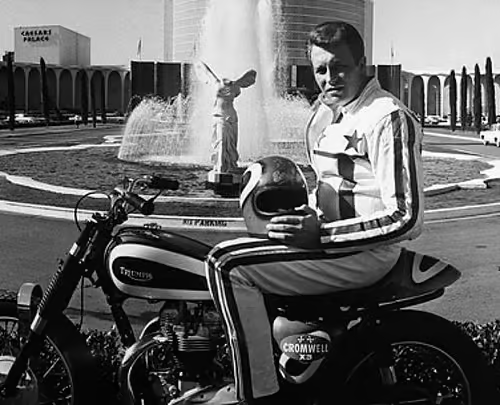
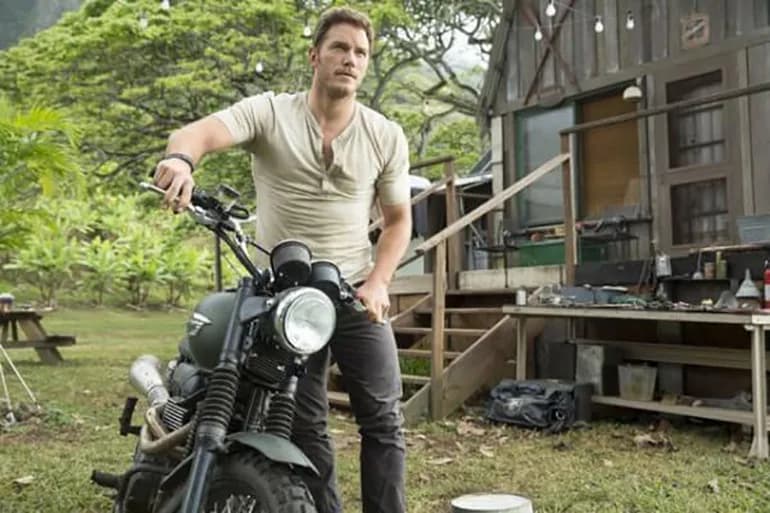
The Bonneville's cultural record is hard to match. Steve McQueen, James Dean, Bob Dylan, and Clint Eastwood all became associated with the Bonneville in its 1960s peak. In December 1967, Evel Knievel chose the Triumph Bonneville for his first major televised stunt — the attempt to jump the Caesar's Palace fountain in Las Vegas. On screen, Marlon Brando rode a Triumph Thunderbird in The Wild One (1953), and the bike that jumped the fence in The Great Escape (1963) was a Triumph TR6, with stuntman Bud Elkins in the saddle. More recently, the Bonneville has appeared in Jurassic World, London Has Fallen, Doctor Who, and Luther.
Royal Enfield on screen & in the field
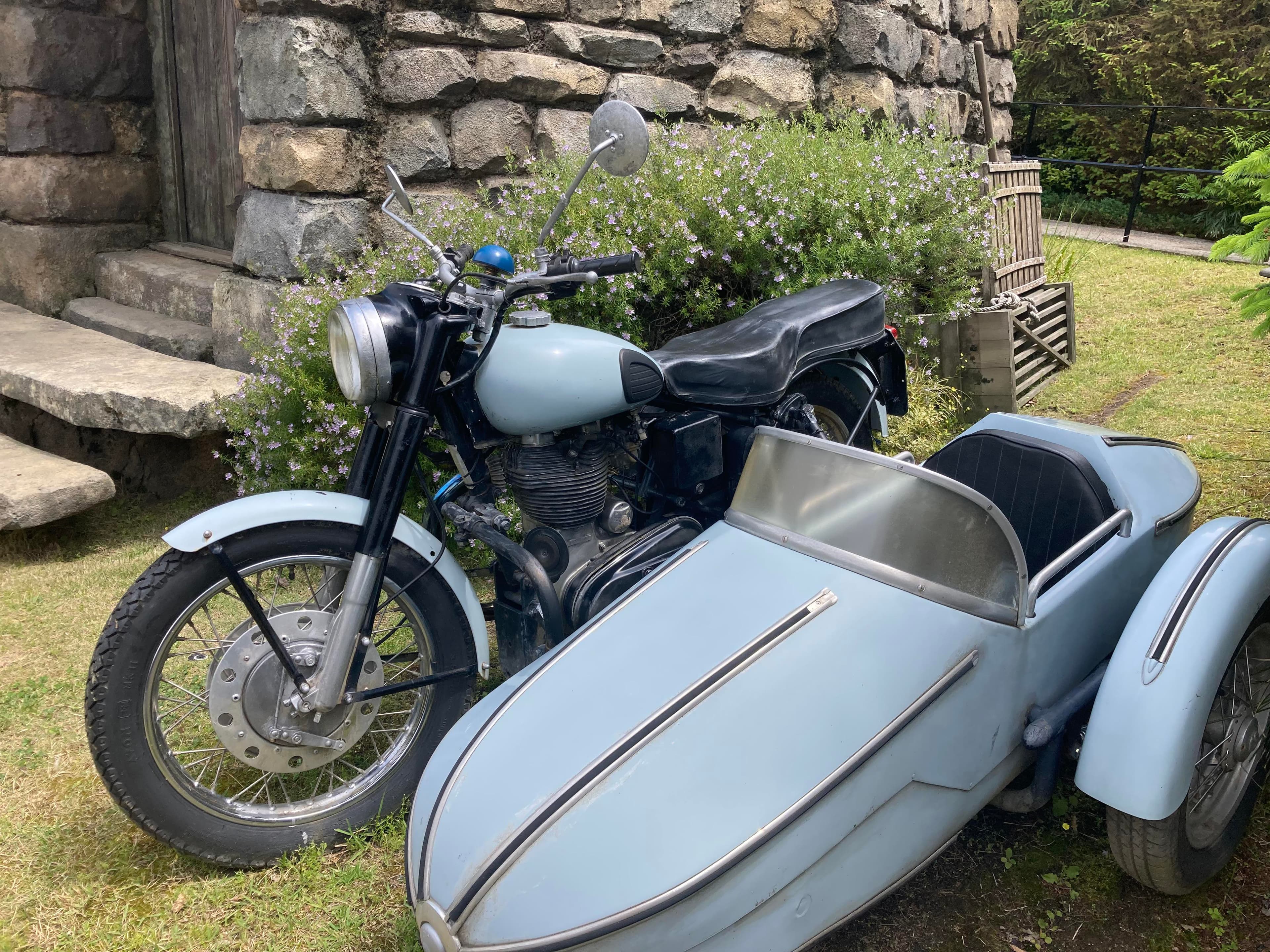
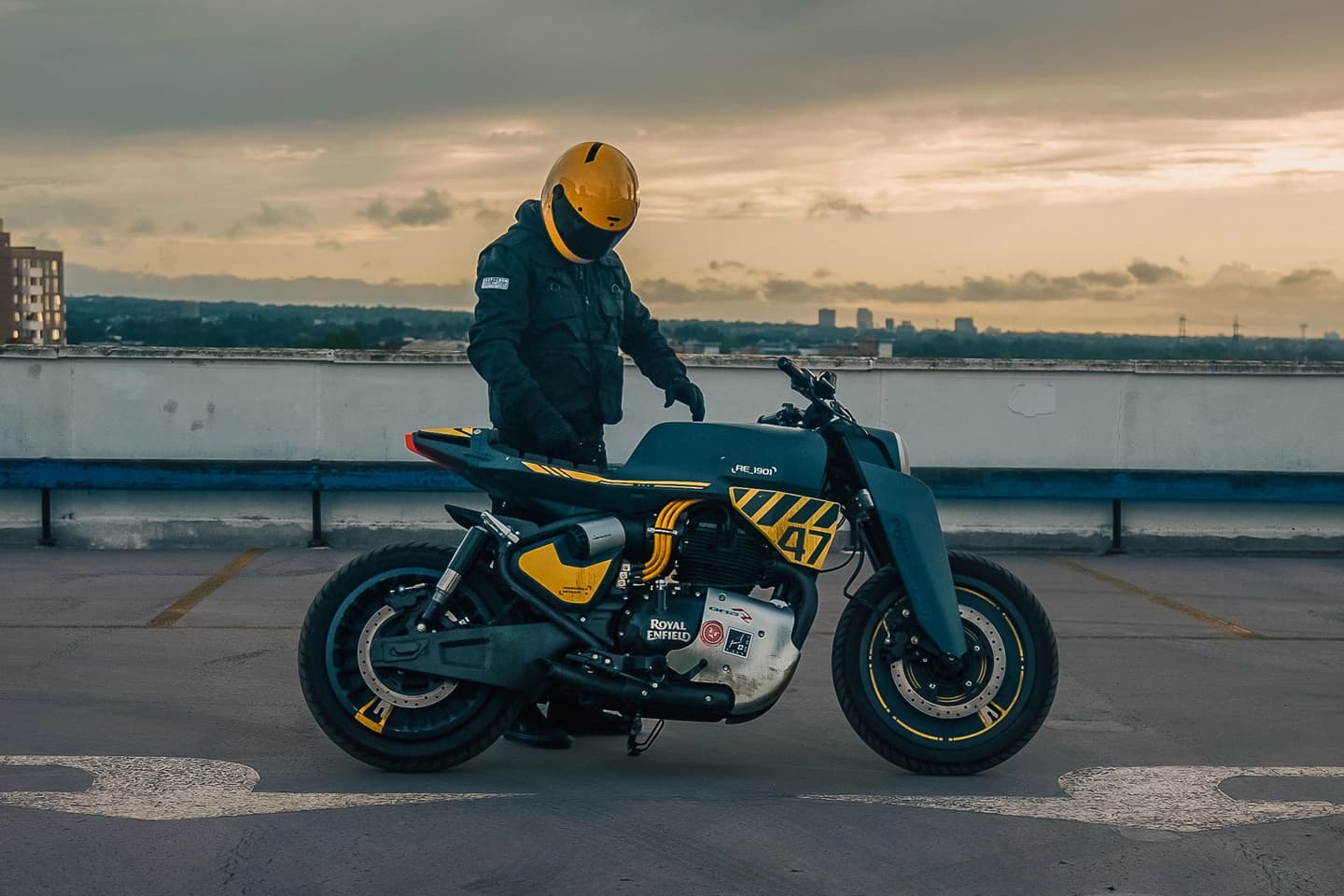
Royal Enfield's pop culture footprint is different — less Hollywood, more global. Hagrid's enchanted flying motorcycle in Harry Potter and the Deathly Hallows was a modified Royal Enfield Bullet 500 with a Watsonian sidecar — chosen, according to the production notes, for its timeless vintage look. In the Netflix dystopian film The Kitchen(2023), a custom Royal Enfield Shotgun 650 serves as the primary ride for the lead character, customized by Royal Enfield's UK team for a 2044 London setting. In India, the brand has appeared in dozens of Bollywood films as a cultural shorthand for freedom, adventure, and military service.
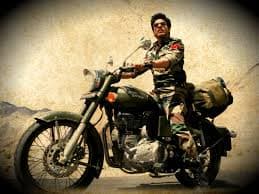
One credential the Bonneville doesn't have: the Indian Army has been riding Royal Enfields continuously since 1955, when the government ordered 800 Bullet 350s for border patrol duty in some of the most demanding terrain on earth. That relationship has never stopped. The same basic motorcycle that patrols the Himalayas today is the direct ancestor of the bike you'd ride out of Speed City on a Saturday morning.
How they look
Both bikes share the same visual DNA — round headlamp, parallel twin, upright riding position, classic proportions. The differences are in refinement, scale, and detail.
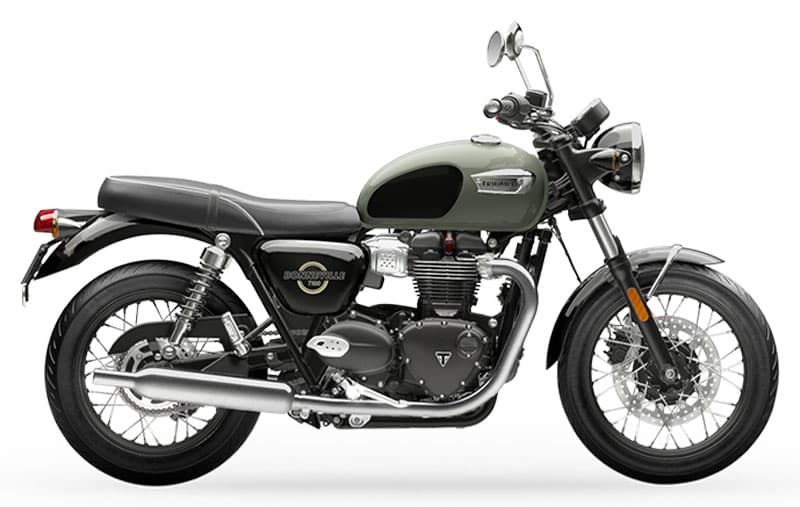
Larger, heavier, and more finished-feeling. Chrome is used generously throughout. The proportions are slightly bigger than the Royal Enfields — this is a 900cc twin vs. a 648cc, and the bike wears the difference visually.
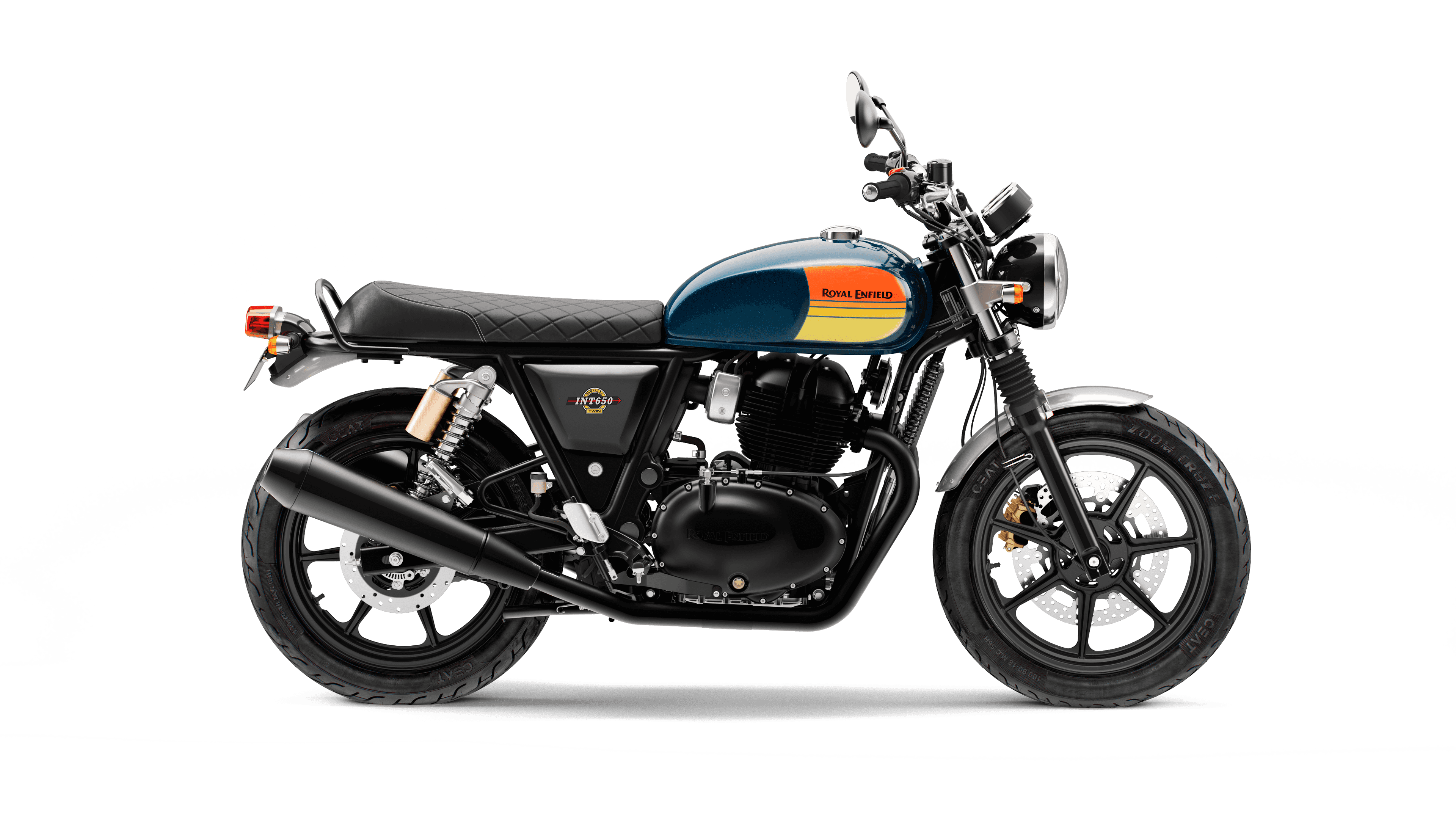
More compact and lighter on its feet. The Interceptor leans into the café racer silhouette — slightly more angular tank, twin exhausts, and a seat line that rises slightly at the rear.
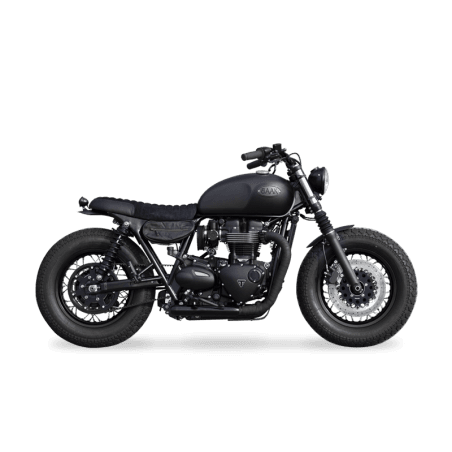
The T120 steps up to 1200cc and carries more visual mass. This example shows a blacked-out custom build — the T120 platform is popular with the aftermarket precisely because it looks right with almost any modification.
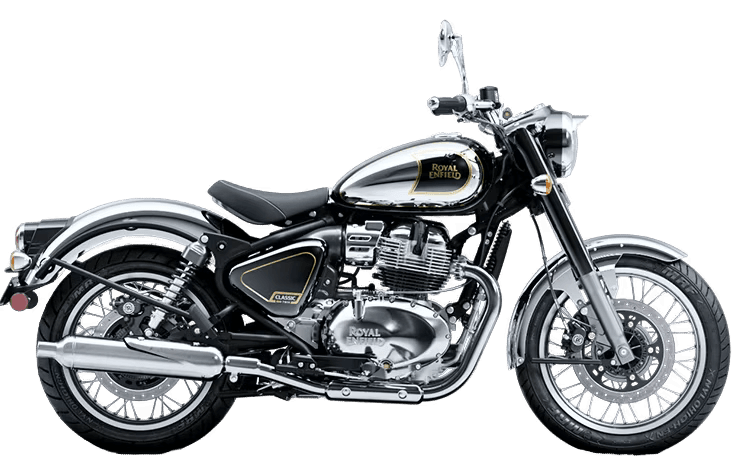
The Classic 650 takes the retro brief even further — rounder fenders, more chrome, and a silhouette closer to the original British twin era. Heavier than the Interceptor at 535 lb.
Side by side specs
| Triumph T100 | Triumph T120 | RE Interceptor 650 | RE Classic 650 | |
|---|---|---|---|---|
| Engine | 900cc parallel twin | 1200cc parallel twin | 648cc parallel twin | 648cc parallel twin |
| Seat height | 31.1″ | 31.1″ | 31.7″ | 31.5″ |
| Curb weight | 513 lb | 513 lb | 478 lb | 535 lb |
| Gearbox | 5-speed | 6-speed | 6-speed | 6-speed |
| Starting MSRP | $11,495 | $13,995 | $6,149 | $7,499 |
| Warranty | 2 years | 2 years | 3 years | 3 years |
Engine and performance
The Triumph has more displacement and more power. The T100 produces around 65 horsepower, the T120 around 80, compared to the Royal Enfield 650 twins at roughly 47. On paper it looks significant, but on most Indiana roads — two-lane state routes, highway commutes, weekend loops through Brown County — it's rarely the difference between an enjoyable ride and a frustrating one. Both bikes cruise comfortably at 70mph with power to spare. The Triumph pulls harder at higher speeds and revs, which matters more on a track or a mountain pass than on a Saturday ride out of Indianapolis.
The Royal Enfield 648cc parallel twin has a different character — relaxed, torquey low in the range, and unhurried. The Triumph, particularly the T120, has more urgency due to the larger displacement.
Technology
The 2026 Bonnevilles added lean-sensitive cornering ABS, cruise control, and traction control across the range. While central Indiana is mostly flat grid lines, if you take a weekend trip down south to the sweeping, heavily-wooded curves of Brown County — where damp leaves or loose gravel frequently hide on the asphalt — Triumph's IMU-driven cornering safety net can be a confidence booster.
Royal Enfield's 650s have dual-channel ABS but no cornering ABS, no traction control, and no cruise control. For most riding in central Indiana, none of that is a daily need. For someone who rides in varied conditions, longer distances, or in the rain regularly, the Triumph's electronics may be an advantage.
Accessories and customization
Triumph offers over 100 official accessories, and over 80 percent of Bonnevilles leave the showroom with at least some modifications. The Royal Enfield accessories catalog is smaller but has grown significantly in recent years — crash guards, panniers, exhausts, seats, and windshields are all available.
Price and warranty
The 2026 Bonneville T100 starts at $11,495. The T120 starts at $13,995. A Royal Enfield Interceptor 650 starts at $6,149, and the Classic 650 at $7,499. The gap — $4,000 to $6,500 depending on which models you compare — is the most significant difference between these bikes.
Triumph's warranty is two years unlimited mileage. Royal Enfield's is three years unlimited mileage with roadside assistance included.
Who should choose each
Choose the Triumph Bonneville if:
- You want the most refined version of the modern classic experience
- You cover significant mileage and will use the T120's cruise control and superior electronics regularly
- You have the budget and want to buy once rather than trade up
Choose Royal Enfield if:
- You want the classic look and riding experience at a price that leaves room for gear, accessories, and actual riding
- You're a first-time 650 buyer who isn't sure yet how often you'll ride or whether you'll stay with the style
- You value a longer warranty and straightforward ownership costs
- You want multiple bikes — at $6,149, the Interceptor costs roughly half a T100, which is a different financial decision
Both bikes have a distinctive look and a story to tell. A lot comes down to which story you want to be part of — and the $4,000 to $6,500 difference in what you'll need to pay for the Bonneville. Both bikes cover the same roads in central Indiana, look broadly similar parked outside a diner, and will outlast most riders' interest in this style if maintained properly.
See the Royal Enfield lineup
Speed City Motorworks carries the full Royal Enfield lineup at 3464 W 16th St in Indianapolis — the only authorized Royal Enfield dealer in the city.